Resilience and adaptability
Help organisations anticipate disruption, maintain essential functions, recover effectively and adapt to changing needs. Build resilience into operating models, technology choices, governance and everyday work.
We work towards public systems that connect, withstand disruption and adapt as needs change.
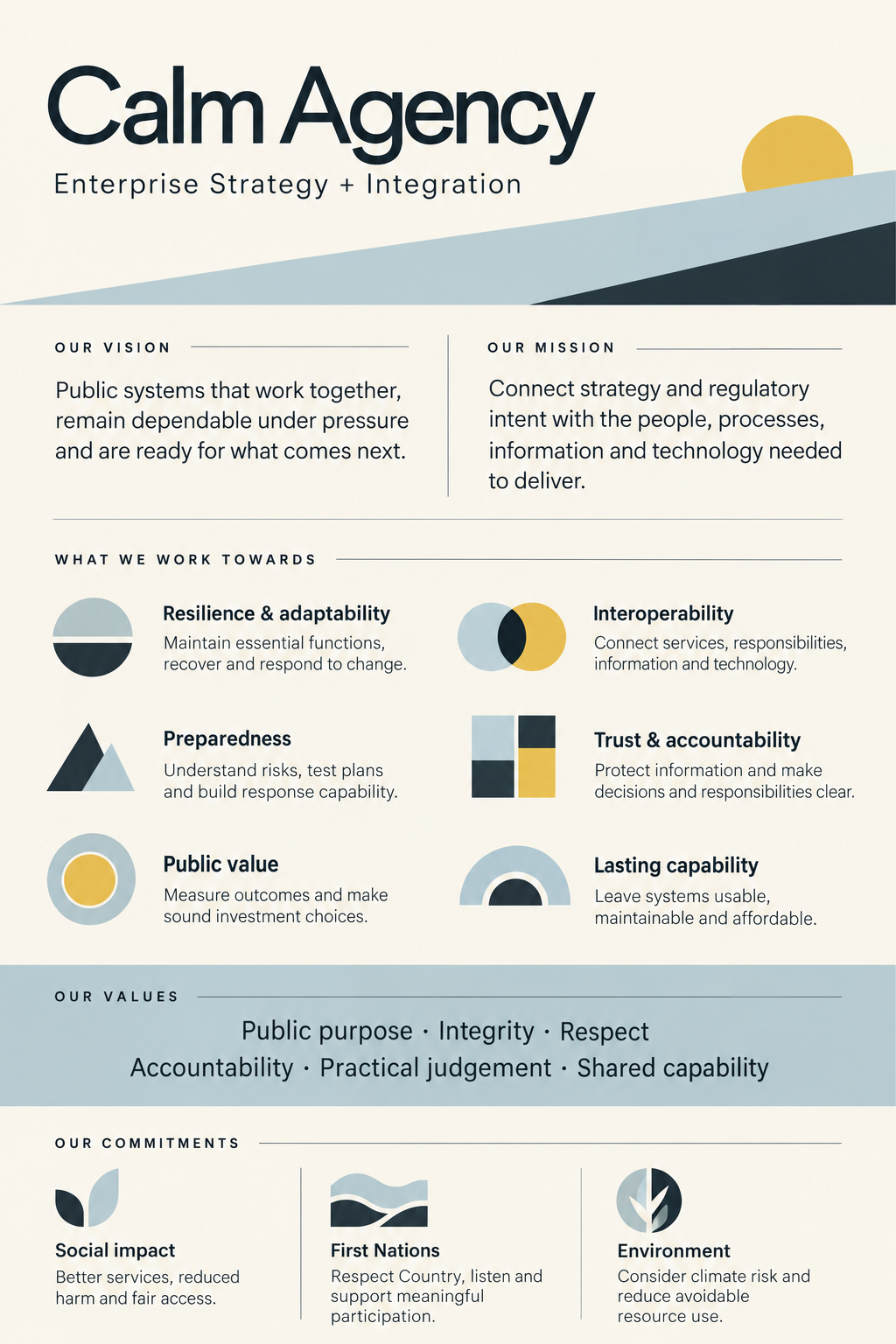
Public systems that work together, remain dependable under pressure and are ready for what comes next.
We help government, regulators and essential service organisations connect strategy and regulatory intent with the people, processes, information and technology needed to deliver.
We work alongside client teams, bringing experienced specialists together to resolve difficult problems, strengthen capability and make better use of public investment.
Help organisations anticipate disruption, maintain essential functions, recover effectively and adapt to changing needs. Build resilience into operating models, technology choices, governance and everyday work.
Connect responsibilities, services, information and technology across organisational boundaries. Reduce duplication and gaps so people can act on reliable information and services work as a whole.
Identify emerging risks, capability gaps and dependencies before they become urgent. Establish clear responsibilities, test practical plans and build the capacity to respond to both known and unexpected events.
Make decision rights and ownership clear. Build privacy, security and lawful information sharing into connected services, and enable people to raise problems early.
Translate legislative duties and regulatory objectives into sound decisions, proportionate interventions, workable processes and supporting technology. Help leaders decide what to fund, change or stop, and measure whether the intended outcomes occur.
Share knowledge and strengthen client teams. Leave systems and practices usable, maintainable and affordable, with the capability to sustain and improve them after the engagement ends.
Keep the people and communities affected by the work in view. Success means better services, reduced harm and worthwhile use of resources.
Give candid advice, distinguish evidence from assumptions and raise concerns early. Be clear about expertise, responsibilities and conflicts of interest.
Listen to the people doing the work and those affected by it. Value different disciplines and create room for people to question, disagree and contribute.
Make responsibilities and decisions clear. Follow through on commitments and assess results against the purpose of the work.
Understand the conditions in which a solution must operate. Recommend approaches people can deliver, maintain and afford.
Bring specialists together when their expertise is needed. Share knowledge and help client teams build confidence and capability.
Our work aims to improve services, reduce harm and strengthen the institutions Australians rely on. We consider who benefits from a change, who may face barriers and whose experience is missing from the decisions.
We work with clients to make services accessible, involve affected communities and measure outcomes that matter. We share knowledge and build capability so the benefits continue after an engagement ends.
We acknowledge Aboriginal and Torres Strait Islander peoples as the Traditional Owners and Custodians of Country across Australia. We recognise their continuing connections to land, waters, culture and community, and pay our respects to Elders past and present.
Where our work affects First Nations peoples, we seek meaningful participation from the outset. We respect cultural protocols, local knowledge and the authority of communities to speak for themselves. We agree how information and knowledge are collected, used and shared, and recognise that consultation requires time, trust and appropriate remuneration.
We consider environmental consequences in the strategies, operating models and technology decisions we help clients make. This includes climate risks, resource use, the resilience of essential services and the long-term costs of maintaining systems.
In our own work, we use remote collaboration where practical, plan necessary travel efficiently and reduce avoidable printing, purchasing and waste. We favour durable, maintainable solutions and consider reuse before replacement. We make environmental claims only where we can support them with evidence.